The Read Later tab is where technical growth goes to die. Your queue of MuleSoft updates, articles, and videos grows daily. You feel like you are falling behind because you lack hours of spare time after work to catch up. This creates a cycle of technical debt in your own career.
The Reality for Developers and Architects#
Developers face 10-page manuals to solve 5-minute problems. They watch hour-long videos containing only 10 minutes of value. This to-learn list creates more anxiety than skills. Traditional training fails because it ignores how brains process and retain information.
Technical training often adds noise that drowns out the signal. Research confirms this leads to Cognitive Overload. When cognitive load exceeds a certain threshold, performance and learning ability drop significantly. Finding the optimal flow state is critical for retention.
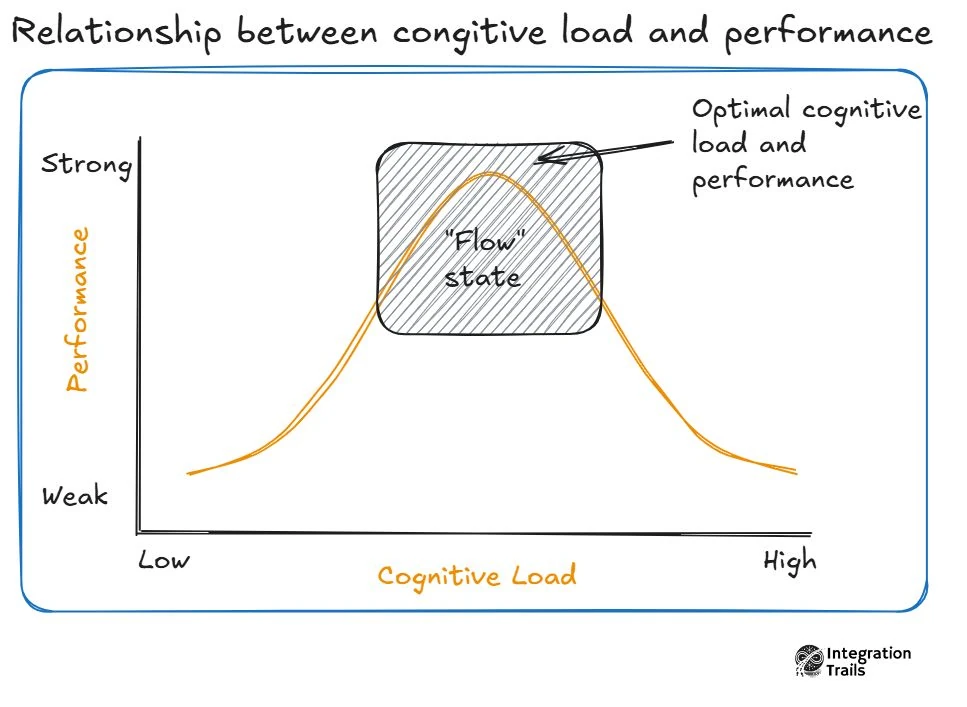
The Science of Learning Failure
We believe learning should be enjoyable and beneficial. It must happen without overloading the brain. Overloading happens when complexity is not broken down into structured lessons. This prevents developers from acquiring skills directly applicable to their work.
The 20-Minute Rule: A Framework for Growth#
I carve out 20 minutes daily for a Specific Objective. I do not try to consume everything. I focus on one actionable insight I can apply immediately. This system keeps skills sharp without causing burnout.
This method aligns with the 70/30 rule of learning. 70% of the process should focus on practical experience. The remaining 30% consists of thoughtful theory. Learning by doing is the foundation of excellence.
Set a Timer
Strictly limit your learning window to 20 minutes. This constraints your focus and forces you to find the most valuable information quickly. If you cannot apply the concept within that window, the material is likely too bloated.
The Microlearning Shift#
Long-form noise is no longer effective. We are moving toward Microlearning to build technical toolboxes in minutes. This content is action-oriented and bite-sized. Each session has one specific goal.
Microlearning is designed for maximum knowledge retention. It removes unnecessary complexity to provide clear, structured learning. Being short does not mean being weak. Expert knowledge is often more powerful when condensed.
Building Your Technical Toolbox
Building a better toolbox requires real-world impact. You need job-ready expertise gained through hands-on exercises. Innovation means staying ahead with cutting-edge, future-proof skills. Microlearning allows you to stay updated with industry advancements as they happen
- Action-oriented: Content must lead to immediate implementation.
- Goal-focused: Every session must solve one specific problem.
- Noise-free: Hard work is required to keep only the necessary expert knowledge.
- High Retention: Small chunks of information are easier for the brain to store.
Key Takeaways
- Kill the Queue: Stop letting your Read Later tab create career anxiety.
- Manage Load: Avoid cognitive overload to maintain optimal performance.
- Apply the 70/30 Rule: Focus 70% of your time on practical application.
- Commit to 20 Minutes: Daily consistency beats irregular long-form sessions.
- Value Density: Choose short, expert-led content that removes the noise.