Are you working to build or advance your career as a MuleSoft developer? You've likely discovered that while the internet is full of information, finding practical, real-world learning resources that fit into a busy schedule can be a real challenge. Standard tutorials often cover the theory, but bridging the gap between knowing what a component does and knowing how to use it effectively in a complex project is crucial for growth.
So, where can you turn when you need more than just the basics and don't have endless hours to study? Here’s a breakdown of valuable resources, moving from foundational knowledge to practical application:
1. Starting Point: Official MuleSoft Training & Trailhead#
MuleSoft's own training materials, increasingly integrated into Salesforce Trailhead, are the logical first stop. They provide essential free resources to understand the core concepts and platform capabilities.
- Pro: Builds a necessary theoretical foundation.
- Con: Can be heavily theoretical. You'll need significant hands-on practice to translate this knowledge into real-world skills.
- Trailhead Bonus: Trailhead adds gamification with badges and points, which can be motivating, though the current MuleSoft-specific content is still evolving beyond the basics.
2. Quick Answers & Peer Insights: The MuleSoft Community#
Stuck on a specific problem? The MuleSoft Trailblazer Community forum is invaluable. It's a space where you can ask questions and often get rapid insights and solutions from fellow developers and MuleSoft experts worldwide. Don't underestimate the power of learning from others' challenges.
3. Practical Examples & Expert Sessions: MuleSoft Meetups#
This is where theory starts meeting practice. MuleSoft Meetups (both local and global) are fantastic resources.
- Online Groups: Check out the global Online Group - English which frequently hosts sessions with MuleSoft employees diving into product intricacies. Crucially, most sessions are recorded and available on YouTube, perfect for catching up on your own time.
- Local & Hybrid: Since the pandemic, many local groups also offer online or hybrid meetups. Search the Meetups platform for topics relevant to you – you might find a past recording that addresses your exact challenge.
4. Deep Dives & Quality Content: Curated and Personal Blogs#
When you need to explore a specific topic in depth, well-regarded blogs are excellent. "Another Integration Blog" on Medium is a prime example where content is often reviewed before publication, ensuring a level of quality and technical accuracy. As well as this, many MuleSoft Mentors and MuleSoft Ambassadors provide their valuable input on blogs. Beyond curated platforms, personal blogs from experienced practitioners offer unique perspectives grounded in direct project work. A great example is the site maintained by renowned MuleSoft Ambassador Sravan Lingam (sravanlingam.com). As the author of this article, I also share further insights and experiences on my personal blog, which you can find at ambassadorpatryk.com.
5. Production-Ready Skills: Advanced Official Training#
For those ready to invest in structured, advanced learning focused on real-world best practices, MuleSoft's official paid courses via Trailhead Academy are highly recommended. Consider:
- DEX660: MuleSoft Production-Ready Development Practices: Focuses on building robust and maintainable Mule applications.
- DEX670: MuleSoft Production-Ready Integrations: Delves into designing and implementing integrations suitable for production environments. These courses, often led by highly experienced instructors, provide insights into production scenarios that basic training doesn't cover. While you might adapt some practices based on your own experience, they offer a valuable baseline for enterprise-grade development.
6. Seeing it All Together: Anypoint Exchange & Accelerators#
Want to understand how complex, multi-API solutions are built using API-led connectivity? Anypoint Exchange is more than just a place for connectors. Look for:
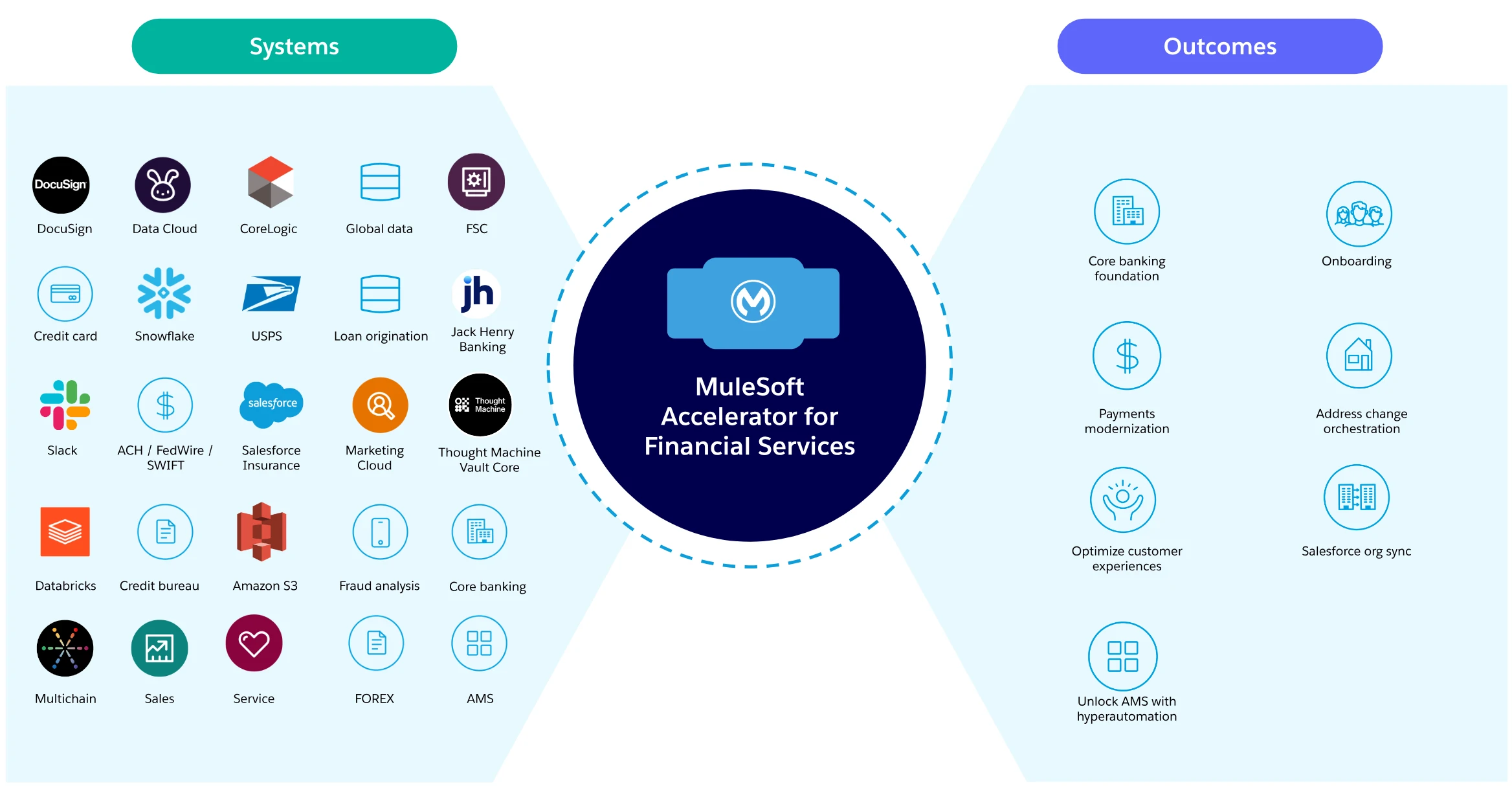
- MuleSoft Accelerators: These are comprehensive, pre-built solutions for specific industries (like the MuleSoft Accelerator for Financial Services). They include API specifications, implementations, data models – often dozens of interconnected assets. Studying these is invaluable for grasping large-scale architecture and the power of reuse. Check Exchange for accelerators covering Healthcare, Retail, and more.
- Templates & Examples: Don't reinvent the wheel. Always check Exchange for templates or examples related to your use case.
The Undeniable Truth: Learning Happens by Doing#
All the resources above are excellent supplements, but the most significant learning – perhaps 70% or more – comes from doing. Getting your hands dirty on actual projects, tackling real business problems, and troubleshooting unexpected issues is where deep understanding is forged. Theory provides the map, but experience teaches you how to navigate the terrain.
Bridging the Experience Gap: Integration Trails#
Recognizing this critical need for practical, experience-based learning, we're launching Integration Trails. Our goal is to create learning materials drawn directly from our team's extensive experience across numerous real-world projects. We want to provide you with the kind of practical insights and best practices that typically only come from years on the job, helping you learn effectively and accelerate your MuleSoft career.
Your Path Forward#
Advancing your MuleSoft skills requires a blend of approaches. Start with the fundamentals, leverage the community, learn from expert demonstrations and deep dives, explore pre-built solutions, and consider advanced training. But above all, prioritize hands-on practice. Combine these elements, and you'll be well on your way to becoming a highly proficient and sought-after MuleSoft developer.